Learn how the deposit return process works in Ireland. Ensure a smooth return of your rental deposit with clear guidelines and rights.
The deposit return process in Ireland is the regulated procedure by which tenants receive their rental deposits back after a tenancy ends, subject to lawful deductions and agreed conditions. Understanding how deposit return process works protects both tenants and landlords from costly disputes. The Residential Tenancies Board (RTB) governs this process under the Residential Tenancies Act, and knowing your rights under that framework is the first step to a smooth, stress-free handover. Whether you are moving out of a Dublin flat or managing a rental property, the steps are the same and the rules are clear.
How does the deposit return process work in Ireland?
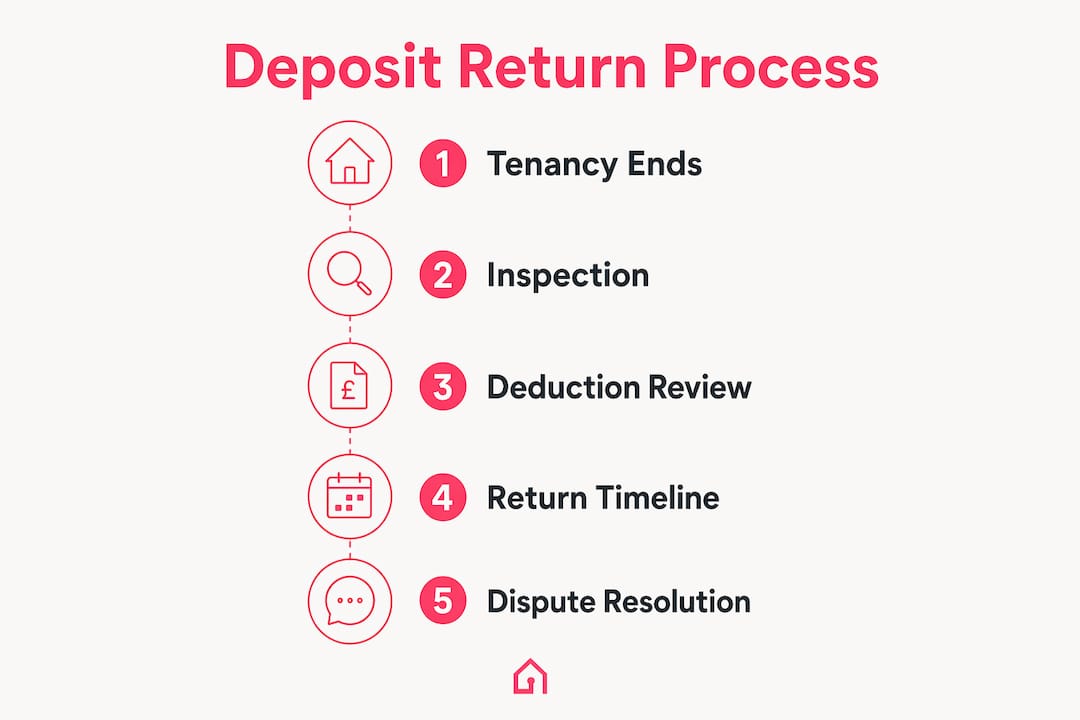
The deposit return process begins the moment a tenancy formally ends. A tenancy deposit is a sum of money paid by a tenant at the start of a lease, held by the landlord as security against damage, unpaid rent, or other breaches of the tenancy agreement. The RTB is the official regulatory body for tenancy disputes in Ireland, and it issues binding determination orders enforceable by the District Court.
The legal framework sits primarily within the Residential Tenancies Act. Section 12(1)(d) and 12(4) of that Act specify tenant protections around fair wear and tear and the landlord's duty to return deposits. These are not optional guidelines. They are statutory obligations. Understanding them before you move out gives you a significant advantage if any disagreement arises.
Timing expectations are a common source of confusion. The deposit return process is not instant, but it should not drag on for months either. The standard benchmark, widely recognised by the RTB and property professionals, is a return within 21–28 days of the tenancy ending.
What are the legal requirements and timelines for returning a deposit?
Landlords carry specific obligations once a tenancy ends. The deposit return explanation under Irish law is straightforward: the landlord must return the full deposit unless there are lawful grounds for deduction, such as unpaid rent, damage beyond fair wear and tear, or breach of tenancy terms.
The steps a landlord should follow are:
Related Topics
#how to get deposit back#how deposit return process works#what is deposit return process#steps in deposit return#how deposit refunds work#understanding deposit refunds#deposit return explanation#deposit return policy details#deposit return system overview
Related Articles
Confirm the tenancy end date in writing and acknowledge receipt of keys.
Inspect the property within a reasonable period after the tenant vacates.
Identify any deductions and prepare a written breakdown for the tenant.
Return the deposit or the remaining balance, with the written statement, within 21–28 days.
Retain receipts and photographic evidence for any claimed deductions.
Returning the deposit within 21–28 days is best practice, though the Act does not always specify an exact statutory deadline. That distinction matters. A landlord who delays without reason is exposed to an RTB dispute application.
Landlords must allow for fair wear and tear when calculating deductions. Natural deterioration from ordinary use is the landlord's responsibility, not the tenant's. A scuff on a skirting board after two years of tenancy is wear and tear. A broken door hinge is not.
Pro Tip:If you are a landlord, send the written deduction breakdown by email so you have a timestamped record. This single step prevents the majority of RTB disputes from escalating.
How can tenants prepare to ensure a smooth deposit return?
Preparation is the most reliable way to get your deposit back in full. The steps below cover what to do before you move in, during your tenancy, and on the day you hand back the keys.
Take a detailed move-in inventory. Photograph every room, every appliance, and every wall on the day you move in. Date-stamp the photos and email them to yourself or the landlord immediately. This creates an undeniable record of the property's condition at the start.
Repeat the process on move-out day. Walk through the property with the same systematic approach. Photograph the same areas and compare them directly to your move-in shots.
Book a professional end-of-tenancy clean. A professional clean with a certificate costs €120–€400 and is one of the most effective tools in a deposit dispute. The certificate proves the property was returned in a clean condition.
Submit your Notice of Termination return form.Submitting this form promptly formalises the tenancy end date and keeps RTB records accurate. Either the tenant or the landlord can submit it, but do not assume the landlord will do it.
Keep all communication in writing. Text messages, emails, and WhatsApp messages are all valid evidence. If you have a verbal conversation about the deposit, follow it up with an email summary.
Gather your payment proofs. Bank statements showing the original deposit transfer, your lease agreement, and any rent receipts form the backbone of your claim if a dispute arises.
Pro Tip:Send a formal written request for your deposit return on the day you hand back the keys. State the date, the property address, and your bank details for the transfer. This starts the clock clearly and gives you a paper trail from day one.
Tenants who follow these steps rarely end up in formal disputes. The ones who do are almost always those who relied on verbal agreements or skipped the move-in documentation.
What steps should you take if there is a dispute over deductions?
Disputes over deposit deductions are common, but the RTB gives you a clear path to resolution. The process is accessible, relatively affordable, and legally binding.
Requesting a breakdown first
Before filing anything formally, request a written breakdown of all deductions from your landlord. Do this by email so the request is timestamped. Give the landlord a reasonable period, typically five to seven working days, to respond. Many disputes resolve at this stage once both sides see the evidence laid out in writing.
Filing with the RTB
If the landlord does not respond or the breakdown is unsatisfactory, the next step is a formal RTB dispute application. The numbered steps are:
Gather all evidence: photographs, receipts, correspondence, the lease, and bank statements.
Submit your application online through the RTB's dispute resolution portal.
Pay the application fee. RTB applications cost €15 and must be submitted within 28 days of the dispute arising. Missing that window can bar your claim.
Attend telephone mediation if offered. Mediation is faster than adjudication and often resolves the matter without a formal hearing.
If mediation fails, the case proceeds to adjudication. An adjudicator reviews all submitted evidence and issues a binding determination order.
If the landlord ignores the determination order, it is enforceable through the District Court.
The RTB adjudication process is not just a formality. Adjudicators review photographic evidence, receipts, and correspondence submitted online. A well-documented case, with a professional cleaning certificate and timestamped photos, regularly results in full or partial deposit recovery for tenants.
When submitting evidence, prioritise clarity over volume. A set of ten clear, labelled photographs is more persuasive than fifty unlabelled images. Include the cleaning certificate, any repair receipts you paid for, and every piece of written communication with the landlord about the deposit.
Evidence that carries the most weight
Dated photographs from move-in and move-out
Professional cleaning certificate
Bank statement showing the original deposit payment
Email or text correspondence about the deposit
Signed inventory from the start of the tenancy
How do you recover a deposit without a receipt or with an uncooperative landlord?
Missing a formal deposit receipt does not end your claim. Tenants can claim their deposit back using alternative evidence, and the RTB accepts these substitutes in dispute applications.
The evidence that replaces a formal receipt includes:
Bank statements showing the exact transfer amount on the date the deposit was paid.
Emails or text messages confirming the deposit amount, the property address, and the landlord's acknowledgement.
The signed lease agreement, which typically references the deposit amount and payment terms.
Witness statements from someone present when the deposit was paid, such as a housemate or family member.
Signed move-in inventory, which often references the deposit as part of the tenancy setup.
Tenants without a formal receipt have successfully recovered deposits through the RTB using bank transfers and signed inventories as primary evidence. The RTB is interested in the substance of the claim, not the format of the paperwork.
If your landlord is unresponsive, send a formal written demand by email and keep a copy. State the deposit amount, the tenancy dates, and your bank details. If there is no response within a reasonable period, file the RTB dispute application immediately. Do not wait. The 28-day window from the date of the dispute runs quickly.
Understanding deposit protection for renters in Ireland also helps you frame your claim correctly when speaking to the RTB. Knowing the terminology and your legal standing makes the process less daunting.
Key takeaways
The deposit return process in Ireland is governed by the RTB and the Residential Tenancies Act, and tenants who document their tenancy thoroughly from day one are best placed to recover their deposit in full.
Point
Details
RTB governs all disputes
The RTB issues binding orders enforceable by the District Court, making it the definitive route for unresolved deposit claims.
Return within 21–28 days
Landlords should return the deposit or a written breakdown of deductions within 21–28 days of the tenancy ending.
Documentation is your strongest tool
Dated photographs, a professional cleaning certificate, and written correspondence form the core of any successful deposit claim.
No receipt is not a barrier
Bank statements, emails, and signed inventories are accepted by the RTB as alternatives to a formal deposit receipt.
File within 28 days of a dispute
RTB dispute applications cost €15 and must be submitted within 28 days of the dispute arising to remain valid.
What I have seen landlords and tenants get wrong about deposits
From where we sit at Hauzed, the most common cause of deposit disputes is not bad faith. It is a lack of shared documentation at the start of the tenancy. Both sides assume the other will keep records. Neither does. Six months later, one party has a memory and the other has a photograph, and the RTB has to sort it out.
Professional cleaning certificates are underused. Tenants often spend hours cleaning a property themselves, then lose the deposit argument because they have no proof. A certificate from a registered cleaning company costs a fraction of the deposit and is often the single piece of evidence that tips an adjudication. I have seen cases where every other factor was contested, and the cleaning certificate was the deciding document.
The other pattern I notice is tenants waiting too long to act. The 28-day window for RTB applications is not generous. Tenants who spend three weeks sending polite follow-up messages and then discover they are out of time have no recourse. The moment a landlord refuses to return a deposit or fails to respond, the clock is running. Act early, document everything, and use the RTB process without hesitation. It exists precisely for this situation.
Landlords benefit from clarity too. A written deduction breakdown sent promptly, with receipts attached, closes most disputes before they open. Transparency is not just good practice. It is the fastest way to close out a tenancy and move on.
— Hauzed
Renting with more confidence starts before the deposit dispute
Deposit disputes are stressful, but most of them are avoidable. The right rental relationship starts with verified identities, clear agreements, and organised communication from the very first interaction.
Hauzed is a trust-first rental marketplace for Ireland that connects verified tenants with landlords and property agencies. Tenants can build a stronger rental profile, verify their identity, and communicate with landlords through a single organised platform. Landlords can manage tenant requests, schedule viewings, and handle conversations without the chaos of scattered messages. Explore how Hauzed works and see how a more organised rental process reduces the risk of deposit disputes before they start.
FAQ
How long does a landlord have to return a deposit in Ireland?
The widely accepted best practice is 21–28 days after the tenancy ends. While the Residential Tenancies Act does not always specify an exact statutory deadline, unreasonable delays expose landlords to RTB dispute applications.
What can a landlord legally deduct from a deposit?
Landlords can deduct for unpaid rent, damage beyond fair wear and tear, and breaches of the tenancy agreement. Natural deterioration from ordinary use is the landlord's responsibility and cannot be charged to the tenant under Section 12 of the Residential Tenancies Act.
What happens if my landlord refuses to return my deposit?
Submit a dispute application to the RTB within 28 days of the dispute arising. The application costs €15, and the RTB can issue a binding determination order enforceable through the District Court.
Can I claim my deposit back without a receipt?
Yes. The RTB accepts alternative evidence such as bank statements showing the deposit transfer, emails confirming the amount, and signed lease agreements. A formal receipt is helpful but not required to make a successful claim.
What is the Notice of Termination return form?
It is a form submitted to the RTB to formalise the end of a tenancy, recording tenant and landlord details, the property address, and the tenancy dates. Submitting it promptly supports accurate RTB records and strengthens your position in any deposit dispute.